Current news and events

8-9 September:PREDI-LYNCH consortium meeting in Bratislava

PREDI-LYNCH Coordinator Mev Dominguez-Valentin

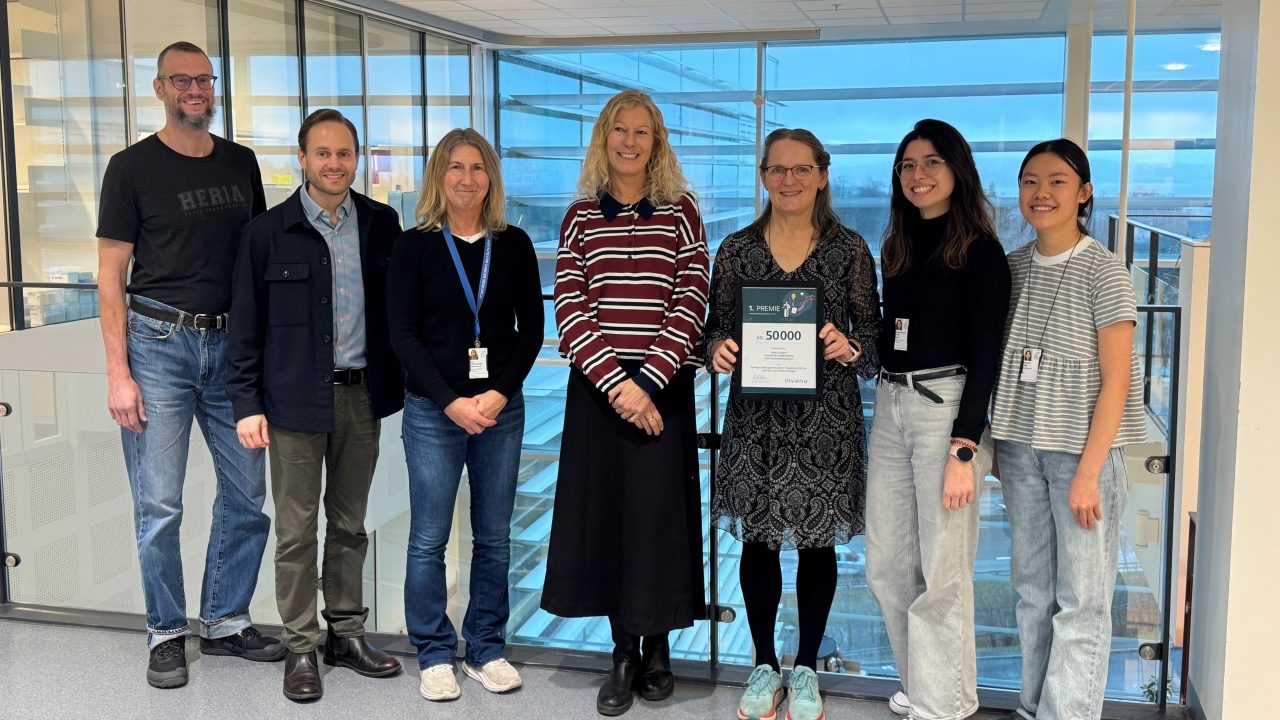
Oslo University Hospital coordinates PREDI-LYNCH, a European project developing less invasive ways to detect cancer early in people living with Lynch syndrome. On 8–9 September the consortium met at the Comenius University Science Park in Bratislava for its General Assembly and annual meeting, hosted by Geneton and Comenius University.
"Our ambition is to generate evidence that can guide clinical practice and make earlier detection more accessible across Europe," says PREDI-LYNCH Coordinator Mev Dominguez-Valentin of the Department of Tumour Biology, Institute for Cancer Research. "This meeting helps us agree the next steps towards that goal."

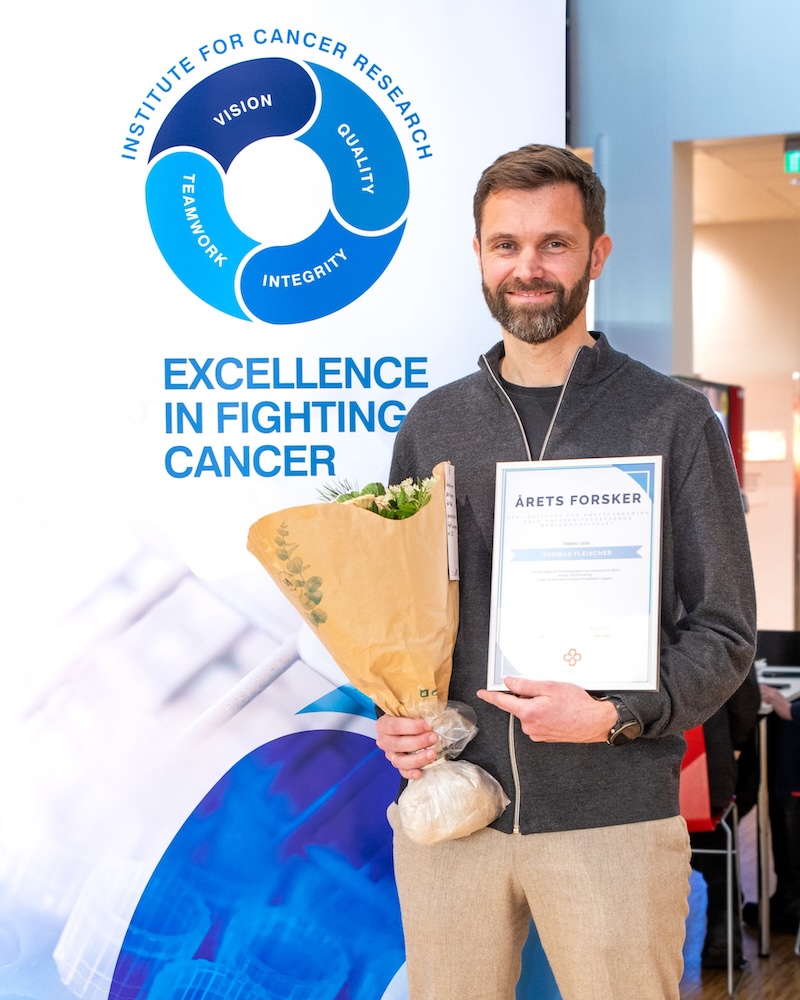
Maja Radulovic uncovers new mechanism of lysosomal membrane repair

Maja Radulovic, first author
Maja Radulovic,
first author

Cancer cells are highly dependent on their lysosomes, and damage of lysosome membranes has emerged as a novel strategy for cancer therapy. Maja Radulovic, project leader in Harald Stenmark´s group at Institute for Cancer Research, has previously identified mechanisms that mediate repair of damaged lysosome membranes, including a mechanism involving transfer of lipids from the endoplasmic reticulum (ER) to the damaged lysosome. However, it has remained unclear how efficient lipid transfer is orchestrated. In a recent paper in Nature Cell Biology, Radulovic and her co-workers have identified a new regulator of lysosome repair, the ER protein DFCP1. DFCP1 serves to concentrate lipid channels in ER microdomains that contact the damaged parts of the lysosome, thereby ensuring efficient membrane repair. Because DFCP1 microdomains are regulated by two druggable enzymes, this opens new possibilities for targeting lysosome integrity in cancer therapy.

New England Journal of Medicine publication:New drug offers hope for patients with narcolepsy type 1

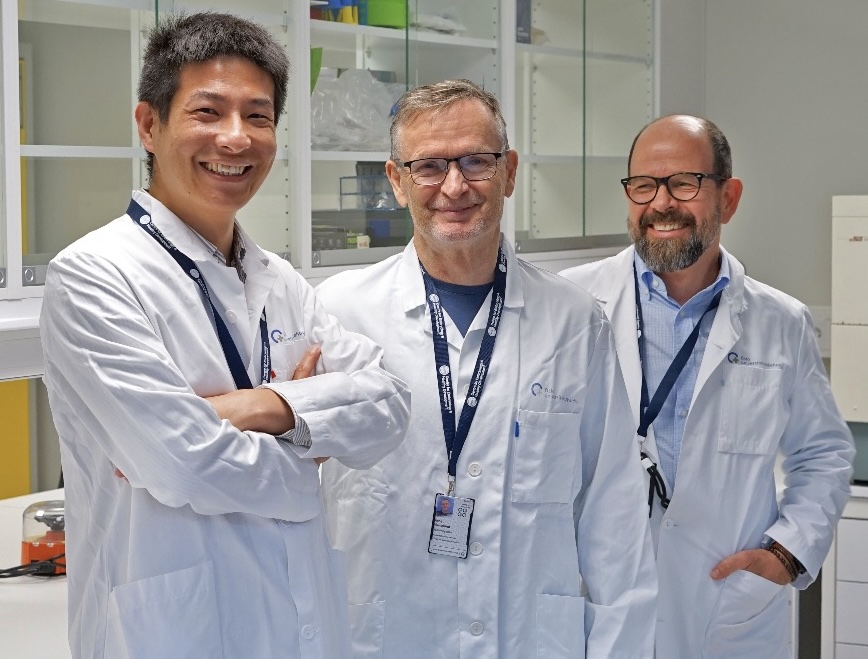
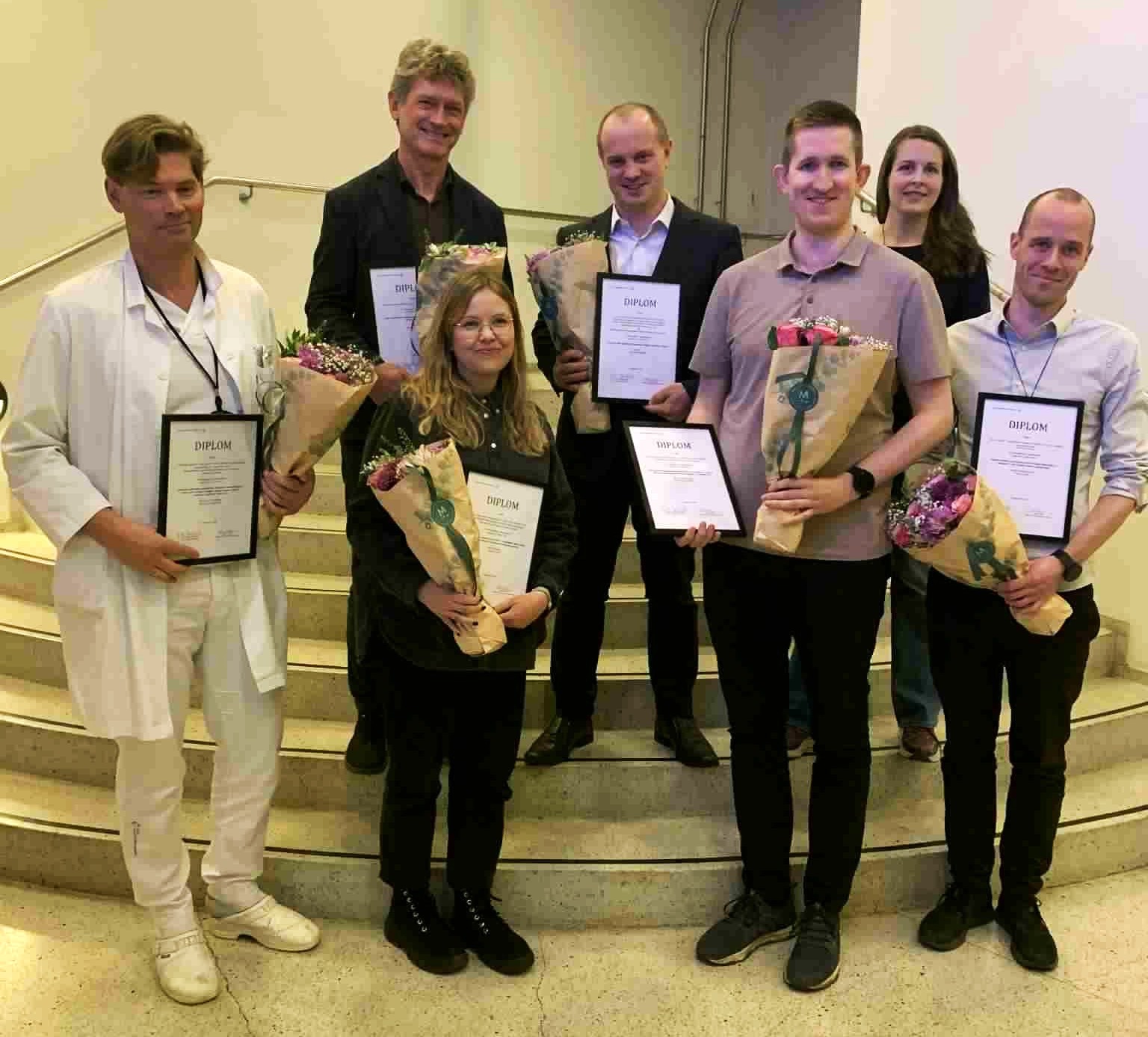
Some of those who have worked on the clinical study

A study published in New England Journal of Medicine gives hope to patients with narcolepsy type 1. The drug oveporexton shows a very good effect on reducing daytime sleepiness, increasing daytime alertness and reducing cataplexy - but some also experience side effects. TAK-861 (oveporexton drug, which is taken as tablets by mouth twice daily) shows promising results in phase 3 study.
Kristian Bernhard Nilsen, leader of the Research Group for Applied Neurophysiology, has been responsible for Oslo University Hospital's participation in the clinical trial, in collaboration with neurologist and somnologist Ragnhild Berling Grande from the National Center for Rare Diagnoses, Brain diseases unit, and several others in the study group at OUS.

Link collection - current news:News stories involving OUS researchers

New papers in RSC Medicinal Chemistry and ACS Omega: Two new routes into antibiotic chemical space

James Booth and Emily Helgesen

Work from the Bacterial Defense Systems and Antimicrobial Resistance Group, led by James Booth and Emily Helgesen at the Department of Microbiology, together with Henrik Franzyk's laboratory at the University of Copenhagen, has produced two new papers on antibiotic candidates built outside the compound classes now in clinical use. One paper, in RSC Medicinal Chemistry, builds peptidomimetics from short peptide fragments attached to small-molecule scaffolds. The other, in ACS Omega, derives antimicrobial peptides from TisB, a toxin bacteria produce as part of their own physiology. Both papers aim at chemical space that existing resistance mechanisms have not already been selected against.

NPI Vaccines publication:A light-controlled vaccine technology based on PCI can significantly enhance immune responses

Pål Kristian Selbo
Pål Kristian Selbo

In a paper published as open access in NPJ Vaccines, Pål Kristian Selbo and coworkers demonstrate how a light-controlled vaccine technology based on photochemical internalization (PCI) can significantly enhance immune responses to both peptide- and protein-based vaccines when combined with synthetic dsRNA adjuvants. The findings support further exploration of PCI as an approach to improve therapeutic cancer vaccines and other immunotherapies.
The work has also been highlighted in a popular science article at forskning.no.
Selbo is head of the Photochemical internalisation (PCI) research group at the Department of Radiation Biology at the Institute for Cancer Research.

New European Medical Journal paper:The Epitranscriptomic Landscape in Early Mammalian Embryonic Development: A Narrative Review

Sophie Bresson, first author

Postdoc Sophie Bresson, member of the RNA modifications in development and disease group led by Yanjiao Li at the Department of Microbiology, is the first author of this new paper published in European Medical Journal (EMJ) – Reproductive Health.

In this new narrative review the authors highlight an emerging layer of regulation that helps control this transition: chemical modifications to RNA, collectively known as the epitranscriptome.

Colorectal cancer is now the leading cause of cancer-related death among adults under 50 in Norway

A new research letter published in JAMA Network Open shows that colorectal cancer has become the leading cause of cancer-related death among adults younger than 50 years in Norway.

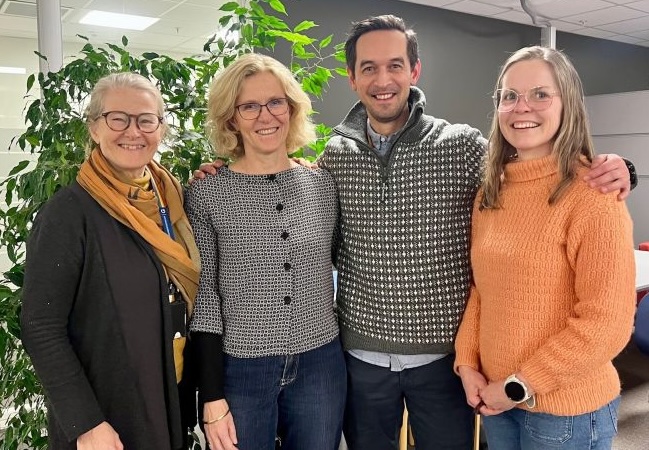
Anita Sveen and Luis Nunes
Luís Nunes, researcher in the Computational Oncology group led by Anita Sveen, is first author of a research letter examining trends in cancer mortality among people aged 20-49 years in Norway. Overall, the findings are encouraging, as cancer mortality has decreased by more than half among young adults since 1996. Significant declines were reported for the major cancer types.

19-20th November 2026:15. National research conference in musculoskeletal health

The conference is interdisciplinary and will run over two days with exciting lectures on musculoskeletal health related to new pain therapies, migration health, sleep and sleep disorders and osteoporosis. We will also have a debate on possible solutions to musculoskeletal problems. Furthermore, the conference will provide up-to-date research through open oral presentasions and poster presentations covering several areas of the musculoskeletal field. 

Time and place: November 19-20 2026 at Clarion Hotel Oslo Airport, Gardermoen 
Deadline for abstract submission: Sept 17 (possible to apply for extended deadline)

Complete information from the conference homepage (muss.no) (in Norwegian)

More news from the archive