ERGO – Epilepsy Research Group of Oslo
Research profile and aims.
ERGO has been active in epilepsy research for about 25 years and consists of two groups:
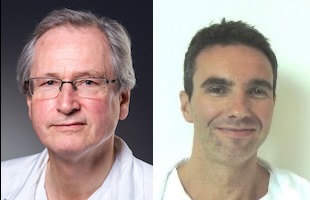
- Research group for Clinical Epilepsy Research. Group leader Erik Taubøll
- Research Group for Translational Epilepsy Research. Group leader Kjell Heuser.
The many research projects are closely linked and are therefore referred to collectively.
Research within ERGO is currently focusing on seven main areas
For more detailed information see under “ongoing projects”
1. Astrocyte-driven brain hyperexcitability as novel treatment target for epilepsy
This project aims to detect novel and potentially curative treatment targets for people with brain hyperexcitability disorders focusing on migraine and epilepsy. In this project an established epilepsy mouse model is used and cutting-edge techniques such as 2-photon microscopy and optogenetics applied. The project joins forces from two strong collaborating research groups: The Epilepsy Research Group of Oslo (ERGO), Oslo University Hospital, and Letten Centre /GliaLab, Division of Anatomy, Department of Molecular Medicine, Institute of Basic Medical Sciences, University of Oslo led by Rune Enger.
2. Is epilepsy a progressive disease?
This is a prospective longitudinal follow-up study on people with Temporal Lobe Epilepsy (Pro-TLE), focusing on changes of the clinical, radiological (MRI) and neuropsychological status over a period of 10 years. The follow-up is still ongoing and will be closed in 2028.
3. Effects of ASMs on epileptogenesis – studies in zebrafish
Studies on the effect of ASMs on gene expression related to immune genes in zebra-fish have recently been finished. Further studies on mechanisms involved in epileptogenesis and the effects of both ASMs and anti-inflammatory drugs on these processes in zebrafish are now starting up.
4. Epilepsy and cardiology
It has become increasingly clear that several epilepsies are channelopathies, as are many cardiac arrhythmias. This is of central importance for understanding sudden unexpected death in epilepsy (SUDEP). We have also studied the impact of several years of active epilepsy on cardiac function. A phd thesis is planned to be submitted within 2025.
5. Status epilepticus
This is an important field of our research with a variety of studies. First, we are collating national experiences on how patients with this condition are treated in Norway. A national reference group for SE has been established.
Over the last 3-4 years, an international collaboration with prof. Christoph Patrick Beier and his group in Odense, Denmark has been established focusing on long-term prognosis of status epilepticus. Age is an obvious risk factor of poor outcome in SE and both clinical and animal studies on the effect of age is now ongoing.
We are also one of the centres including patients in a European Status Epilepticus registry that will in a few years create a large database to be used for further studies in the field.
6. Traumatic brain injury and posttraumatic epilepsy
A project to study the possible predictive value of different parameters, especially related to inflammation, measured immediately after traumatic brain injuries on the frequency of posttraumatic epilepsy was started in 2021 in collaboration with groups from US and Europe.
In addition, studies on early posttraumatic seizures based on databases in department of Neurosurgery, and studies based on the national traumaregistry have been conducted during the last 2-3 years
7. The Prehospital Seizure Control trial – (PreCtrl)
The intention is to describe the prehospital and initial in-hospital pathways and treatment of patients with seizures, to standardize national EMS guidelines and improve time to control in seizure management. We also plan to implement a new model for standardizing competence, communication and treatment for prehospital seizure assessment. This is a collaboration with The Norwegian Air Ambulance Foundation, Oslo Metropolitan University, and Department of Prehospital services, OUH.
In addition to these main areas of research, the group also has interests in epilepsy and endocrinology, women and epilepsy, ketogenic diet, epilepsy and dementia and genetics in epilepsy.