Welcome to the Department of Pediatric Research
The Pediatric Research Institute (PFI) was established as a joint university and hospital institute at the Rikshospitalet in 1959. In the first years, research focused on hematology; however, soon a whole range of research topics was established, including metabolic diseases, pediatric cancer, adverse effects of bilirubin, and basic research on the effect of peptides on diseases.
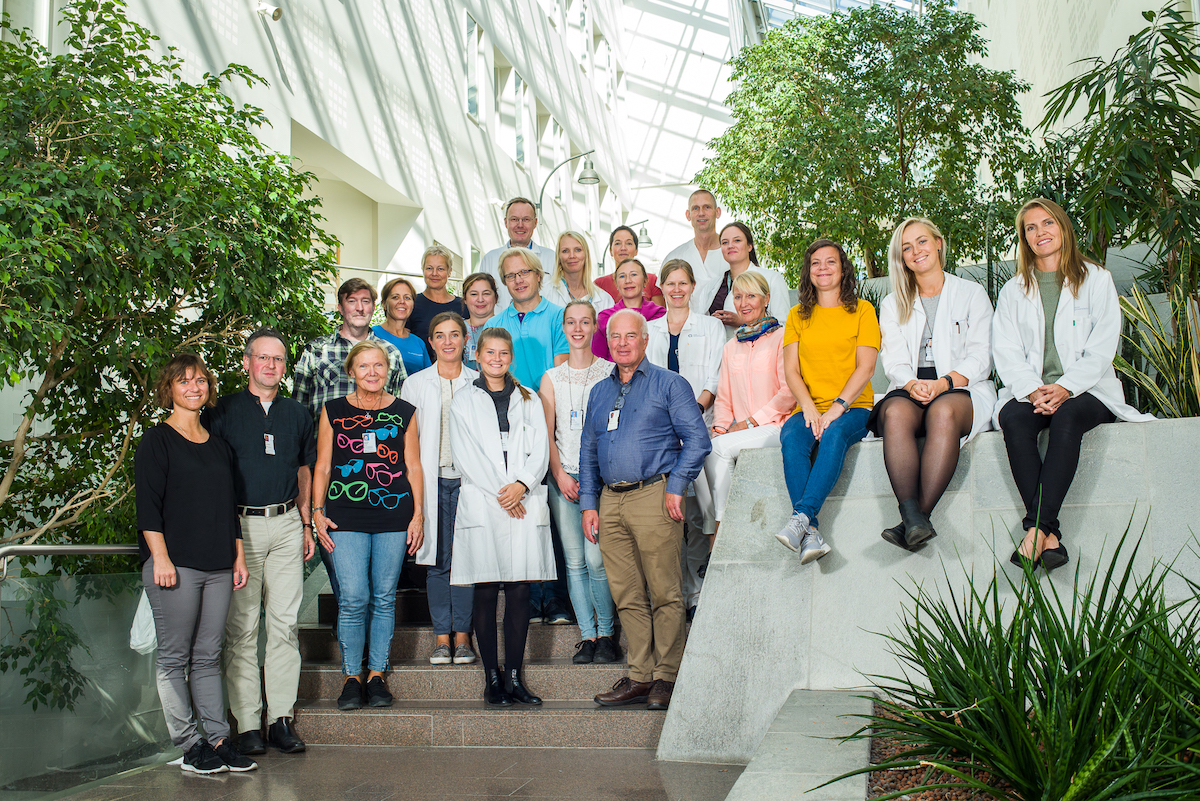
During the last 20 years, the research focus was primarily on the effect of hypoxia-reoxygenation injury and oxydativ stress, especially during the neonatal period. For this purpose, a number of animal models and cell culture models were established at the PFI.
PFI collaborates extensively with a number of national and international research groups.
Overall goals:
The PFI is committed to promote pediatric research through advanced science in combination with clinical practice. The aim is to obtain scientific knowledge for a better understanding, treatment, and prevention of pediatric diseases. To reach this goal, we intend to
- create a research environment for researchers and clinicians in the field of pediatrics
- provide a platform to discuss scientific achievements for clinicians and scientists from different disciplines
- advice and provide knowledge to health professionals and the general public
- perform a variety of different relevant major research projects
- apply and develop different techniques and methods for our research
- encourage and value practical, translational, and basic pediatric science
- connect and exchange our knowledge with national and international collaboration partners
... for the sake of our children
Our research focuses currently on:
-
Hypoxia-reoxygenation injury and oxydativ stress in the neonatal period
-
Pediatric liver kidney alimentary nutrition and transplantation
-
Infections and immunology
-
Type 1 diabetes risk in children
-
Pediatric cancer
Latest department news:
Dissertations for the Degree of PhD in 2012:
Charlotte de Lange Early effects of perinatal hypoxia and resuscitation on cerebral perfusion and metabolism assessed by MRI, CEUS and FDG-PET. Experimental studies in newborn pigs.
Gaute Døhlen Cerebral transcriptional factors in hypoxia-ischemia and hyperoxic reoxygenation. A study in transgeneic reporter mice.
Yngve Sejersted Neil3 DNA Glycosylase in Maintance and Repair of the Mammalian Brain.
Grete A. Birkeland Kro Umbilical cord acid-base status; Validation and associations with active pushing time and the Apgar score.
Latest awards:
SalusAnsvarpriset 2012 to Professor Ola Didrik Saugstad
The 2011 Landmark Award to Dr. Ola Didrik Saugstad
Contact information:
Department of Pediatric Research
Women and Children's Division
Oslo University Hospital Rikshospitalet
Postal address: P. O. Box 4950 Nydalen, N-0424 Oslo, Norway Street address: Sognsvannsveien 20, 0372 Oslo, Oslo University Hospital, Norway Phone: +47 23 07 27 90 Fax: +47 23 07 27 80, Switchboard: +47 22 93 40 00
Webmaster for PFI: lars.o.baumbusch@rr-research.no
Latest publications
Dept of Pediatric Research
Association between umbilical cord artery pCO2 and the Apgar score; elevated levels of pCO2 may be beneficial for neonatal vitality after moderate acidemia
Acta Obstet Gynecol Scand, 92 (6), 662-70
PubMed 23551012
Comparisons of infant Escherichia coli isolates link genomic profiles with adaptation to the ecological niche
BMC Genomics, 14 (1), 81
PubMed 23384204
Identifying in-trans process associated genes in breast cancer by integrated analysis of copy number and expression data
PLoS One, 8 (1), e53014
PubMed 23382830


Print this page
