
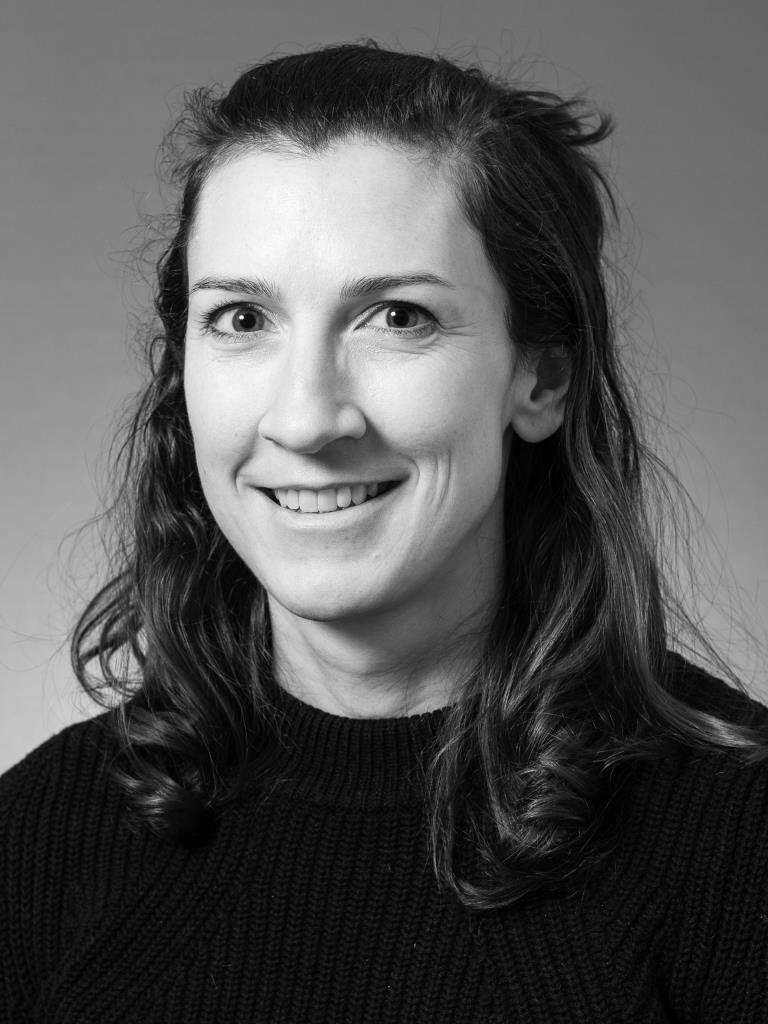
Vivi Talstad Monsen
- Senior Engineer; PhD
Vivi T. Monsen has a M.Sc degree in Biotechnology and a PhD degree in Molecular Medicine from the Norwegian University of Science and Technology (NTNU). Her background includes studying DNA repair mechanisms, protein structure-activity relationships, and cellular stress response mechanisms like autophagy.
She has been working at the Institute for Surgical Research for several years and studies mechanisms contributing to tissue repair and fibrosis, focusing on a family of matricellular proteins/growth factors called CCN proteins.
Publications 2023
Structural insights into regulation of CCN protein activities and functions
J Cell Commun Signal, 17 (2), 371-390
DOI 10.1007/s12079-023-00768-5, PubMed 37245184
Publications 2022
The carboxyl-terminal TSP1-homology domain is the biologically active effector peptide of matricellular protein CCN5 that counteracts profibrotic CCN2
J Biol Chem, 299 (1), 102803
DOI 10.1016/j.jbc.2022.102803, PubMed 36529291
Publications 2021
Tissue distribution and transcriptional regulation of CCN5 in the heart after myocardial infarction
J Cell Commun Signal, 16 (3), 377-395
DOI 10.1007/s12079-021-00659-7, PubMed 34854055
Publications 2018
Connective tissue growth factor (CCN2) is a matricellular preproprotein controlled by proteolytic activation
J Biol Chem, 293 (46), 17953-17970
DOI 10.1074/jbc.RA118.004559, PubMed 30262666
Publications 2015
The marine n-3 PUFA DHA evokes cytoprotection against oxidative stress and protein misfolding by inducing autophagy and NFE2L2 in human retinal pigment epithelial cells
Autophagy, 11 (9), 1636-51
DOI 10.1080/15548627.2015.1061170, PubMed 26237736
DHA-induced stress response in human colon cancer cells - Focus on oxidative stress and autophagy
Free Radic Biol Med, 90, 158-72
DOI 10.1016/j.freeradbiomed.2015.11.018, PubMed 26585906
Publications 2012
Structure-function studies of an unusual 3-methyladenine DNA glycosylase II (AlkA) from Deinococcus radiodurans
Acta Crystallogr D Biol Crystallogr, 68 (Pt 6), 703-12
DOI 10.1107/S090744491200947X, PubMed 22683793
Publications 2010
Divergent ß-hairpins determine double-strand versus single-strand substrate recognition of human AlkB-homologues 2 and 3
Nucleic Acids Res, 38 (19), 6447-55
DOI 10.1093/nar/gkq518, PubMed 20525795